Blog
Open Banking in Nigeria: What It Is and How It Works
Open banking in Nigeria lets customers permit banks and fintechs to share their financial data through APIs. Here is a plain walkthrough of the CBN rules, consent, the registry and…

CARMACHAIN
CARMACHAIN is changing how data is managed, accessed and shared, so that individuals and businesses can keep control over their information.
CARMACHAIN is a decentralized data aggregator in Nigeria that helps lenders, fintechs and developers use consented alternative data for credit assessment. Data owners decide who can access their information, so a lender can look beyond a missing credit file. Start with why alternative credit data matters, check the credit bureau coverage estimator, or read how consented exchange works.
It brings together credit and alternative data, such as electronic utility bill records used for address checks, so lenders, banks and other businesses can verify customers and assess credit. It also serves the individuals the data belongs to, who decide who may access it.
Last reviewed: November 2026. Start with consuming data, contributing data or the API developer guide. Background reading is in our data-sharing ecosystem article.










We believe your data belongs to you. With CARMACHAIN, you retain ownership, control access, and decide who can use your information.
Our platform uses blockchain technology to support data integrity, security, and transparency. Security measures include:
Data you contribute can become an asset: contributors can be rewarded when their data is accessed. Terms and amounts depend on the arrangement, and nothing is guaranteed.
Empowering underserved populations with alternative credit data to access financial services.
Simplify address validation with electronic utility bills, reducing fraud and errors.
Streamline contact point investigations with decentralized data aggregation.
Ensure seamless and compliant customer verification with reliable cross-checked data.
Many people have no formal credit file, so a lender has little to go on. EFInA’s 2026 Access to Financial Services survey, released in September 2026, reports financial exclusion at 21% of adults, down from 26% in 2023. Exclusion is concentrated among the poorest: 53% of adults in the poorest quintile are excluded, against 1% in the richest (EFInA, as reported September 2026). For comparison, the 2020 survey put the figure at about 38 million adults, roughly 36%. For a closer look at who the bureaus reach, see our note on adults without a credit file in Nigeria.
Being included is not the same as having a credit history. Official bureau coverage figures for Nigeria are old or partial, so we would rather point you to the coverage estimator than quote a number we cannot date.
Alternative data, such as utility and bill records, gives lenders another way to look at a thin-file applicant. We cover this in Why use alternative credit data? and Nigeria’s number 1 problem: financial inclusion?
The rules around sharing are also changing. The Central Bank of Nigeria issued its open banking guidelines in March 2023, and the Nigeria Data Protection Act 2023 sets consent standards for processing personal data. We also wrote about joining Open Banking Nigeria. For a wider view of where data use is heading, see our look at data trends that will define 2021 and beyond. Some say data is the new oil, but that comparison probably does not apply to most businesses. For a cautionary view of what weak governance can do to a lender, see this personal reflection on how not to manage a bank.
CARMACHAIN is powered by a team of experts with decades of experience in finance, technology, and data intelligence:
CEO
Consumer lending visionary: a decade in consumer lending for banked and underbanked.

Business Development
Credit reporting expert: a decade in credit reporting in Nigeria.
Technology
Data intelligence innovator: data intelligence for banks and retail.
Our advisory board includes leaders in compliance, industry outreach, and advanced data strategies.
It is a decentralized data aggregator for Nigeria. It collects credit and alternative data, such as electronic utility bills, so businesses can run checks like KYC, address verification and credit assessment. Individuals keep control over who accesses their information.
Individuals and businesses that hold data they are entitled to share. The contribute data page explains how it works. If your situation is unclear, ask through the contact page.
The principle is that data owners decide who can use their information. Nigerian law expects consent to be freely given, specific, informed and clear. The details of what we collect and how we use it are in the privacy policy.
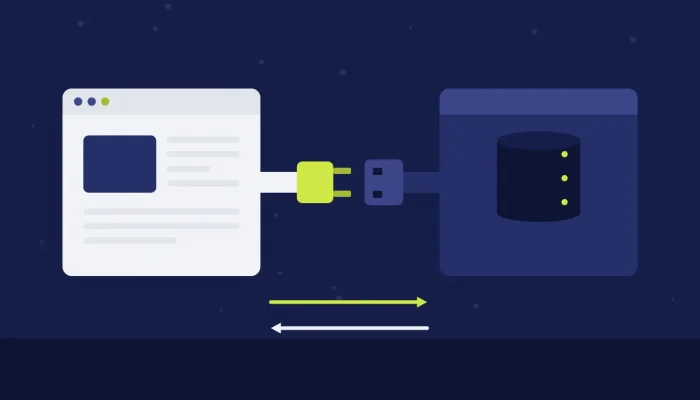
An API is a set of rules that lets one piece of software ask another for data without anyone copying files by hand. For a lender, it means a check can run inside its own app or workflow. Developers should start with the API developer guide.
The API developer guide is the reference for access and endpoints. For business questions before you build, see consume data.
Nothing here is financial or legal advice, and results depend on the data available and the parties involved.
CARMACHAIN bridges the gap between data ownership and use, with a focus on financial inclusion, operational efficiency, and trust. Questions about data, integration or partnerships? Write to us.
Open banking in Nigeria lets customers permit banks and fintechs to share their financial data through APIs. Here is a plain walkthrough of the CBN rules, consent, the registry and…
New articles on alternative credit data, open banking and digital lending — straight to your inbox. No spam.